By Jack Davis
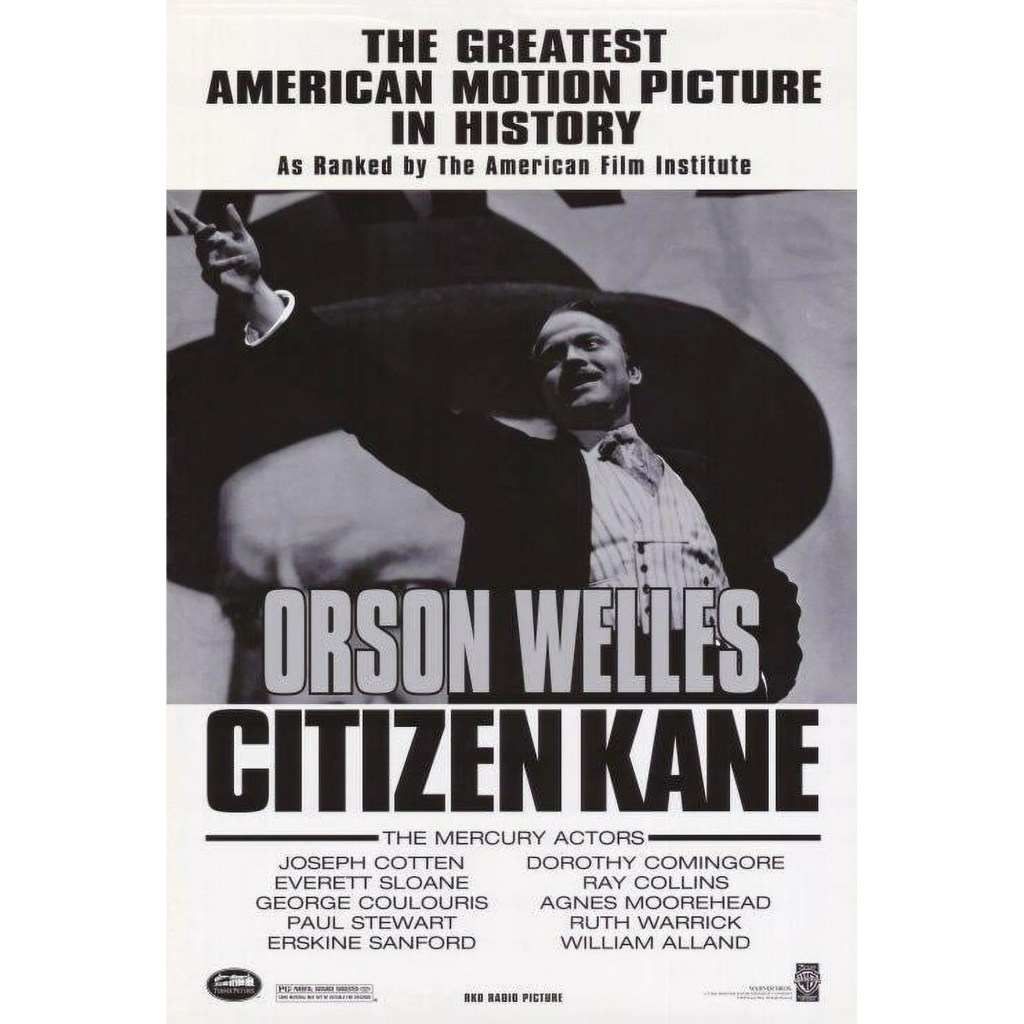
Courtesy of Warner Brothers
Hello again! Welcome to the final part of my two part series on Citizen Kane and non linear storytelling. Last week I discussed a bit about my experience with the medium; if you haven’t read that, please be sure to before reading this part. Today, I’m going to go into famous film critic Roger Ebert’s review of the film and dissect what he has to say about the film’s construction.
I spent hours reading old articles and reviews about Kane as a film and about its structure, and things didn’t really click until I read a review on Roger Ebert’s site (by Ebert himself) from 1998. He said two things that really stuck with me, and even gave me some insight on the Ahab-esque determination I spent with the screenplay I’ve mentioned.
The first thing he said was this: “The film’s construction shows how our lives, after we are gone, survive only in the memories of others, and those memories butt up against the walls we erect and the roles we play.”
This quote from Ebert’s review somehow dissipates all my learned fear about three act structure being the true way to tell a story; maybe that’s not great, a lot of more seasoned and experienced writers say (when talking about things like structure) that you have to “know the rules to break them,” meaning you need to know three act structure well before shifting into more alternative screenwriting practices. Similarly, you must know – and practice – what your hand looks like playing each chord before jumping into a guitar solo. One’s not possible without the other. It’s not something I’d argue with for a second, I just feel like I’m better at telling stories that aren’t in a traditional structure or utilize more than one timeline interchangeably; a lot of times those are the movies I like, and they lend themselves very well to twists or revelations with a character. Sometimes the first scene takes place at the midpoint or end of a story and doesn’t circle back around to that point until the final act of said movie, and I think that’s brilliant. It lends a new context to every scene that wouldn’t be the case if you were viewing everything in linear order. If you know a character’s fate, then you’re especially affected in your gut when you see the character a) doing something to cement that fate or b) doing something that seemingly helps them escape it, but any of the scenes in the latter have a tinge of melancholy added because you know that the relief won’t last.
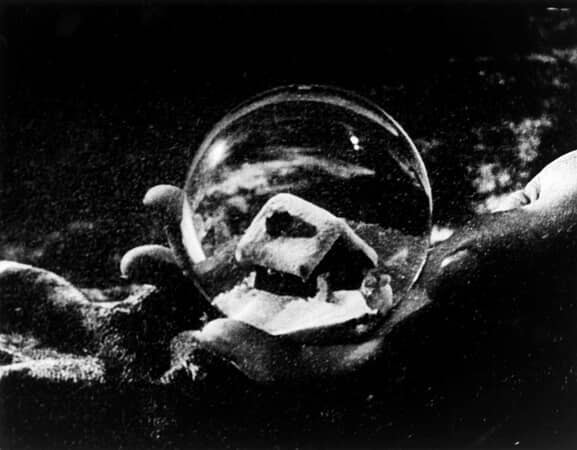
But that’s not the long and short of what I wanted to say about the quote. My main takeaway is that memory isn’t linear, and that if you ask several people to describe a situation, they may describe details differently, even if – as far as they know – they’re telling the truth. When we’re asked to think about a person, or describe how they factored in our lives, the answer isn’t a linear story, one that runs fluid and concentrated from A to Z. We might think of a more recent memory, or a pain point, that may lead into tangents of other memories with shifting tones. The film is largely about constructing an image of Kane through the memories of those who were close to him, or even just knew him at a given time. The reporter – whose face we never see – is simply a device, a way to get the viewer in front of these people so we can listen to the information. Part of the reason – among the many others I touched on – that the movie is so innovative is that it was a non-linear movie released in the early forties. And even now, it’s still one of the most – if not the most – powerful, memorable, and impactful stories to utilize that structure. My thinking is that given the story, the nature of it being a sort of mystery / interview heavy film and one based so much on memories, non-linear structure was the only way to tell it. I don’t think we’d still be talking about – or emulating, with mixed results – this film today had it been told in the traditional linear sense.
The second quote I drew from Ebert’s review was this: “I’ve never been able to firmly fix the order of the scenes in my mind. I look at a scene and tease myself with what will come next. But it remains elusive: By flashing back through the eyes of many witnesses, Welles and Mankiewicz created an emotional chronology set free from time.”
This honestly gave me some relief; Ebert is one of the best film critics out there – during a time where film critics were well followed and known by name – so reading this had the same effect on me that it would’ve if this was coming from a legendary screenwriter. For a film so calculated, well done, and emotional, to this day it’s hard to find a cohesive order or throughline that would explain why each scene is placed where. The emotional effect is still there, the movie doesn’t feel muddled, but usually when a movie has an impact you can make a vague roadmap of the arc. I think people have had an easier time explaining the arrangement of scenes in Christopher Nolan’s Memento, a film I would think to be much harder to explain. I guess what I’m saying is that for movies so well known – doesn’t matter whether they’re non-linear or not – you can usually find someone who can make a good argument for the arrangement.
The most eye-opening snippet from this quote is when Ebert describes the structure as “an emotional chronology set free from time.” If someone asks you to describe the structure, or even the plot, of this classic, I truly think that’s the most concise answer you could give. Even if it’s so damn elusive.
So if I was going to answer the question “what did Citizen Kane teach me about non-linear storytelling?,” in some ways the answer most true would be nothing. Because how do you mimic a movie that you can’t chart out? Or, I could say that what it taught me can’t be put into words. Watching and reading about the movie over and over, it strengthens some living, breathing image in my head of what a good non-linear film, one that necessitates that as being the only logical structure, looks like.
Courtesy of Warner Bros.
I hope you’ve enjoyed my excited (and exciting?) rant about the art of non linear storytelling and Welles’ beautiful film. Please share your own experience with the form – especially if it differs – as well as your opinion of the film. It’s a subjective medium!
Don’t be a stranger; I’d love for you to comment with any questions, concerns, or friendly disagreements. Also feel free to reach out to me through the “Contact Me” section of my page. Peace and love!
 Almost Linear
Leave a comment