By Jack Davis
Welcome to part one of my two-part series discussing Citizen Kane in non-linear storytelling. Today, I’ll talk about my history practicing the form and how it was inspired by Welles’ seminal film.
The art of telling a story out of order still eludes me. It’s crazy to say that, as someone whose thesis screenplay – one I’d also written and rewritten several times in the years prior – was nonlinear. It feels like a bit of a misnomer to describe that journey as a passion project – given that I’m only about twenty-three years old – but that’s the first phrase that comes to mind.
A while ago, I fell in love with that structure, that way of telling a story (I’ll get back to what made me, in case the title hasn’t spoiled it already). It doesn’t necessarily follow a traditional three act structure, and a lot of established – successful, even – screenwriters denounce anything that isn’t a three act structure. They’re very cautious of anything whose structure or genre seems too experimental, I think because the fear is that the end result could play out as an overly broad, empty exercise. “Full of sound and fury, signifying nothing,” as is said in The Scottish Play. It’s a valid fear, if I gave myself a few minutes I could probably think of films where the structure was non-traditional in a way that contributed absolutely nothing to the story. I can also think of films where it looks as if the writer/director smoked a bunch of weed and decided to write “the first movie that mixes six different genres,” and the result – to generously underplay it – was hollow (Hot Summer Nights, anyone?). Often with those movies you get the impression that the creator was thinking of his six favorite directors and wanted to make a movie that paid homage to all of them at the same time.
Those are all valid reasons that more traditional, seasoned writers might be cautious when it comes to a nonlinear story in the present. But – almost paradoxically – it needs to be said that I’d bet my next month of rent some of the classics they swear by – one or two in particular – are nonlinear.
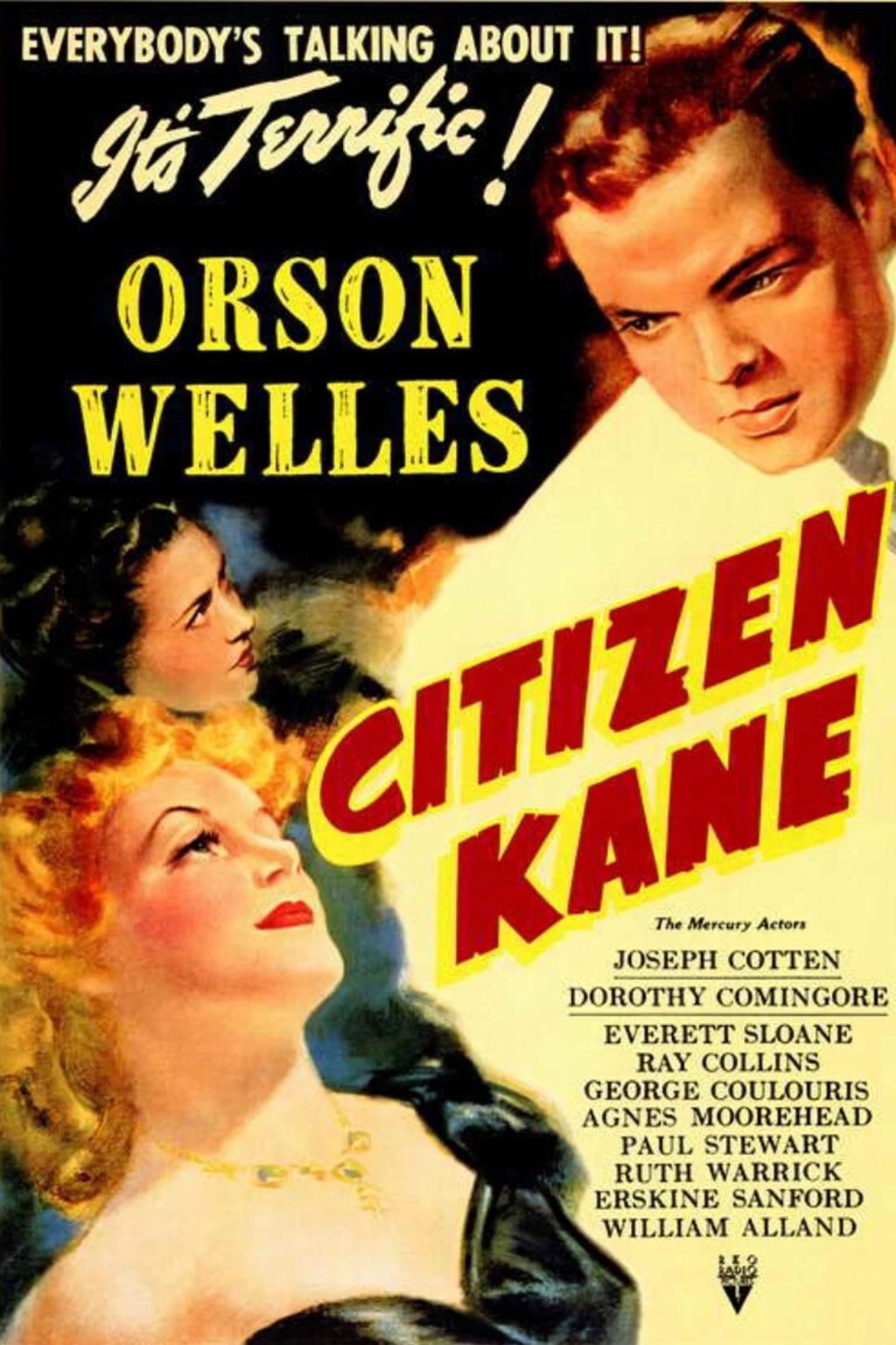
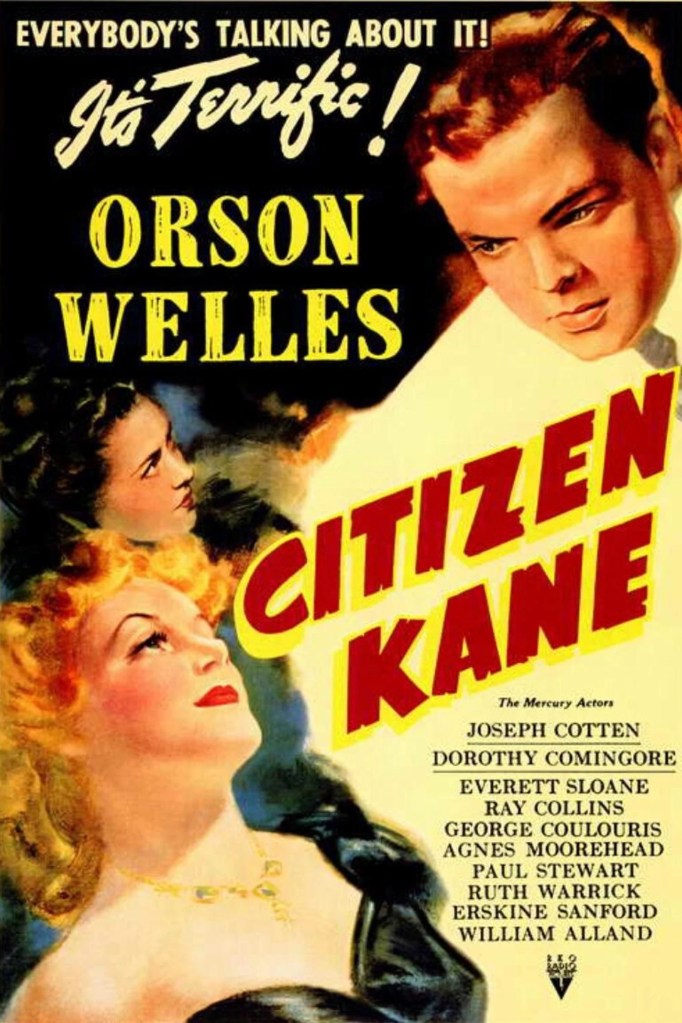
One of those two I’m referring to, and the one between them that would definitely be cited among critics and screenwriters alike, is Orson Welles’ 1941 movie Citizen Kane (took a long time for me to get from the title to the point, right?). Before the structure, it should be noted how much of an anomaly this film was. This was Welles’ first feature film. It was one he co-wrote, directed in, and acted in. And although it only won best original screenplay, Welles was nominated for both his acting and directing. Welles had come off making the hit radio adaptation of War of The Worlds, and while he had never directed a film, he was given free rein to develop his own story. None of the things I just touched on, from being nominated for both directing and acting, to the free rein, not any of it, is a commonality today. I think that Bradley Cooper’s A Star Is Born – or Maestro – would be the closest thing to a present-day comparison if not only by popularity, but it falls short in most of the other angles. Cooper was never nominated for both actor and director, and while the technique (sometimes) in both efforts is impactful, and there is some emotional weight, they’re not films that would spend forty years at number one on the BFI Sight & Sound List. Mostly – and please note I am a huge Bradley Cooper fan – they’re evidence of how much he wants a damn Oscar.
Wikipedia called Welles’ usage of what’s now known as nonlinear structure (while also referring to the cinematography, editing, and music) “innovative and precedent setting,” which may be the first time I’ve agreed with Wikipedia. Citizen Kane blew me away the first time I saw it. I didn’t know movies could be made like this, and this realization came from watching a movie that was released over eighty years ago.
What is it about the structure that inspired me so much as a writer? How did it light a fire in me to spend the most time – and energy – I’ve exerted to this day into a screenplay, doing top to bottom rewrites for years on end, eventually culminating into my screenwriting thesis? Sometimes it’s easier to know something in yourself than it is to put it on paper. That being said, I have to share some experience that will hopefully help you see my side, make the art of trying this out not seem so spooky and elusive, and maybe get you excited about it too.
I hope you’ve enjoyed my introduction on Citizen Kane, the art of non linear storytelling and what’s got me so excited about it. Come back next week, where I’ll pull out quotes from Roger Ebert’s review of the film and speak on the great points he makes regarding non linear structure.
Don’t be a stranger; I’d love for you to comment with any questions, concerns, or friendly disagreements. Also feel free to reach out to me through the “Contact Me” section of my page. Peace and love!
 Almost Linear
Leave a comment