By Jack Davis
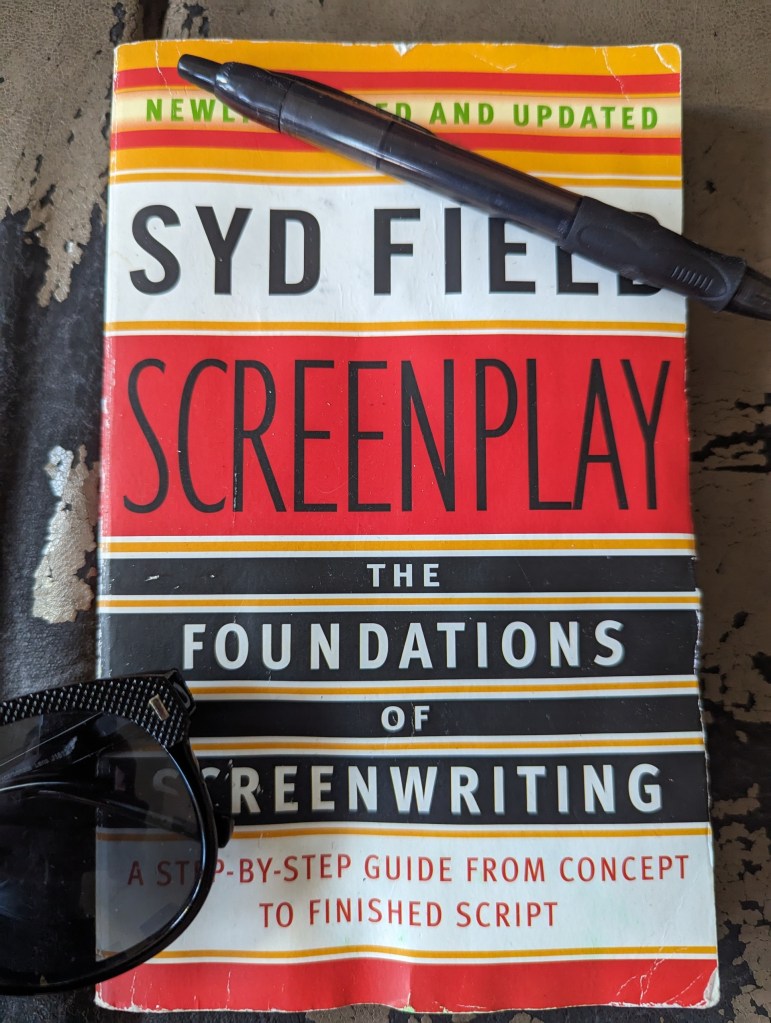
Photo by me
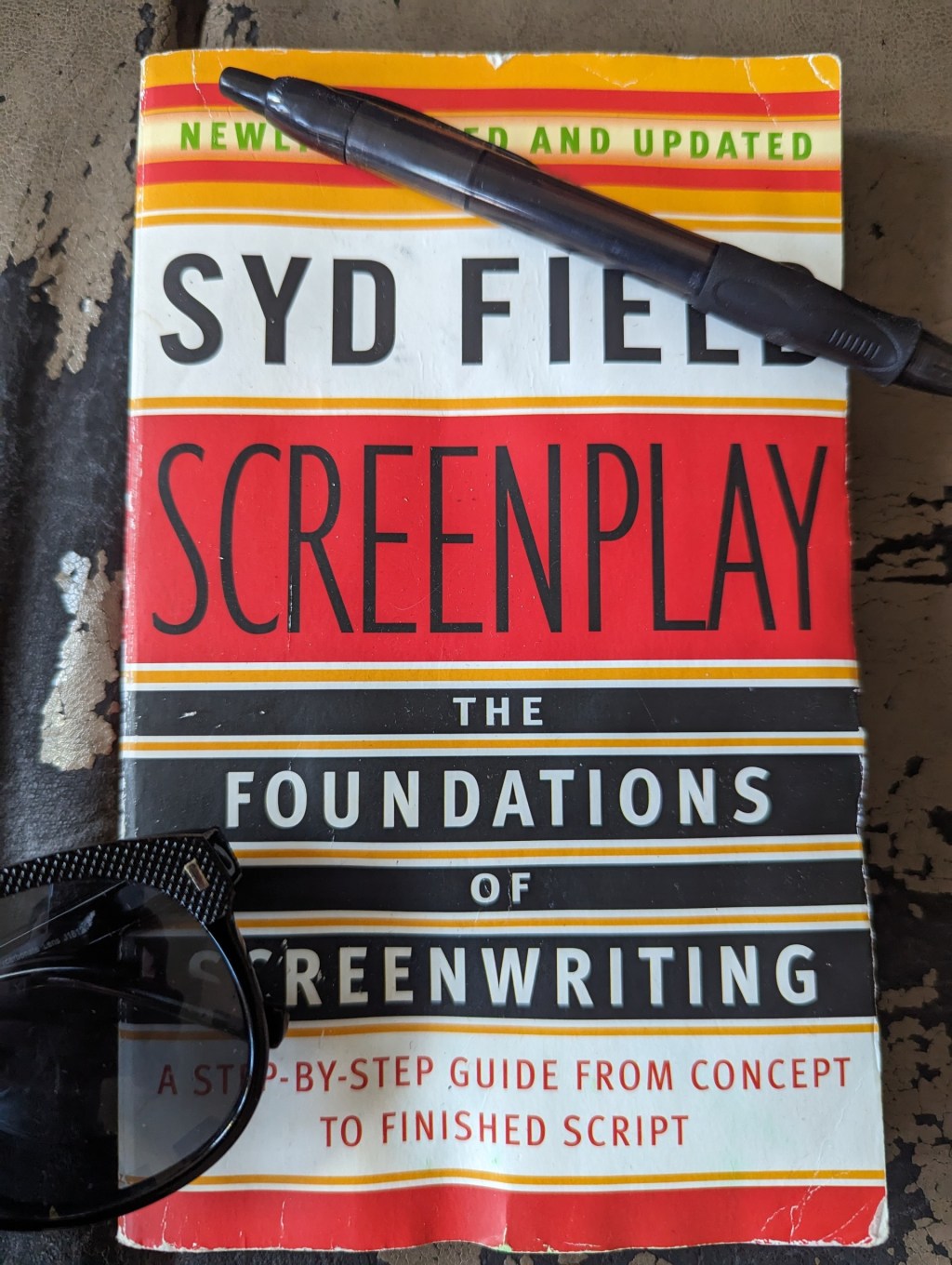
Hello, all! Welcome to my three part series on “endings and beginnings,” where I relate to you my takeaways from a chapter in the first – and best – book I ever read on the basics of screenwriting.
There’s an anecdote Syd Field shares in the “Endings And Beginnings” chapter of his incredibly useful book, “Screenplay.” Whether you’re in the early stages of honing your craft or a seasoned writer looking to go back to the basics, this book is both rich with information and principles as well as simple enough to make these concepts digestible.
Anyway, Field talks about a moment in his life recently after graduating from high school. His mother had passed around that time, as his father had a few years before. He discusses not knowing he wanted to do with himself, only that he didn’t want to immediately go into a committed job or off to college. So, he decided to take a road trip.
He did this for over two years, saying, “I had good times and bad times, and I loved it; I was like a cloud on the wind, drifting without aim or purpose.” A different feeling came when, on the other side of those two years and driving through the Arizona desert, he says, “I realized I had traveled that same road before…” and, “I had spent two years trying to get my head straight, and I still had no purpose, no aim, no goal, no destination, no direction.” Field was certainly travelling, and my takeaway is that it wasn’t a fruitless journey, but immediately following this anecdote he says something very important, something that upon reading made me mull over and rethink how I’ve been going about honing my craft: “When you go on a trip, you are going someplace; you have a destination…”, and that “how I get there is a matter of choice.”
Before I explain what the heck that has to do with screenwriting, I want to openly reflect on how I’ve been writing the past few years; sometimes I’m more disciplined and calculated, but most of the time I wasn’t. Maybe this will ring true for some of you.
First of all, I’ve had a self-proclaimed allergy to outlines (never mind the fact that I haven’t ever devoted much time to one). I insist that they stifle my creativity, and that they dull my self perceived creative “flow.” I’ve been much more partial to writing full-length feature drafts, sitting on them for about four to six months, and then – without much acknowledgement of the previous draft – starting over from page one. I saw it as a path to getting the most refined product, and while it definitely improved my skills with dialogue and stage directions (the latter of which I’m still shaky with), it didn’t do too much. I had confused the phrase “your characters eventually write themselves” for the idea that “as long as your characters are progressively developing, the script will inevitably be fleshed out.” What came out in the end would be admirably and uniquely fleshed out characters, and some good dialogue, but an often otherwise muddled screenplay. Even when by luck the construction of the script had a good rhythm, and it “worked,” I couldn’t trace my steps backwards to see how I’d achieved this.
Photo by me
I was a bit like the younger self Field describes on that two-year journey. I wasn’t “going someplace,” so much as I was chipping away at my 10,000 hours (in that aspect, not a bad thing). But I refused to believe that knowing the ending before writing a single scene was essential, let alone that I long had the opportunity to make things easier for myself, or that there’s something I maybe could’ve been doing better. I preferred to believe that my way was unique, unorthodox, that I knew something seasoned writers hadn’t.
It’s sort of like stumbling into a hospital and giving a medical professional your two cents on how to do open heart surgery. If I sound prideful and pretentious, that’s on purpose, because I was that way.
Hoping you enjoyed part one, what I see as the primer for Field’s upcoming, invaluable advice. In part two I’ll go into two solid pointers I got from the chapter as well as beginning to talk about his thoughts how to open your script.
Don’t be a stranger; I’d love for you to comment with any questions, concerns, or friendly disagreements. Also feel free to reach out to me through the “Contact Me” section of my page. Peace and love!
 Almost Linear
Leave a comment